The Rise of Postcards
Most of the postcards in this collection are from 1907-1915. These dates coincide perfectly with the “Golden Age of Postcards,” a trend which swept the nation.
Government-issued “postal cards,” which could be mailed more cheaply than letters in envelopes, first appeared in the United States in 1873. However, these early cards could have only the address on one side, leaving image and message together on the other side.
The earliest example in the collection is from March 15, 1907. An anonymous sender (initials V.B?) writes from St. Paul, where she is visiting. In handwriting cramped in the margin of the picture of High Bridge, she tells her friend Maline that “people were surprised and also tickled to see the old girl again.” As you can see from the way the message creeps up the side, undivided backs didn’t leave much room for a note.
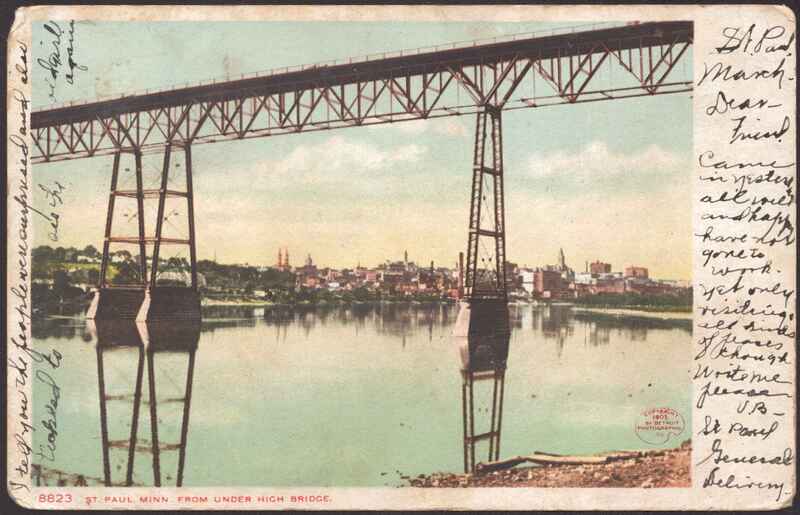
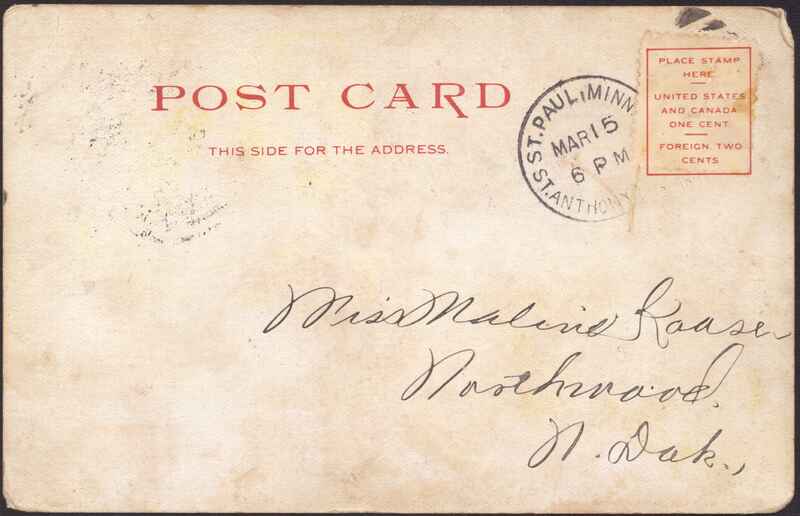
In 1907, new regulations meant that postcards could have both address and message on one side, so images could fill an entire side of the card. This is the kind of postcard that we’re familiar with today. Sometimes old divided back postcards stuck around, though. The latest mailed divided back in the collection is from July 1909, more than two years after laws were changed.
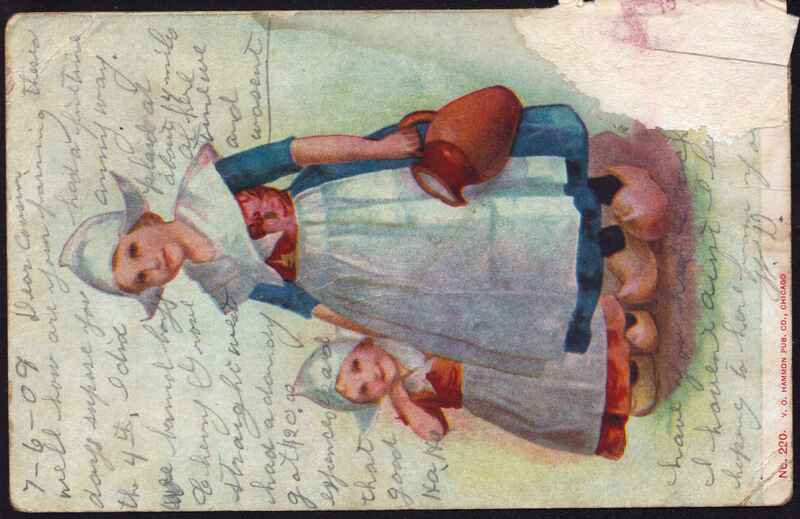
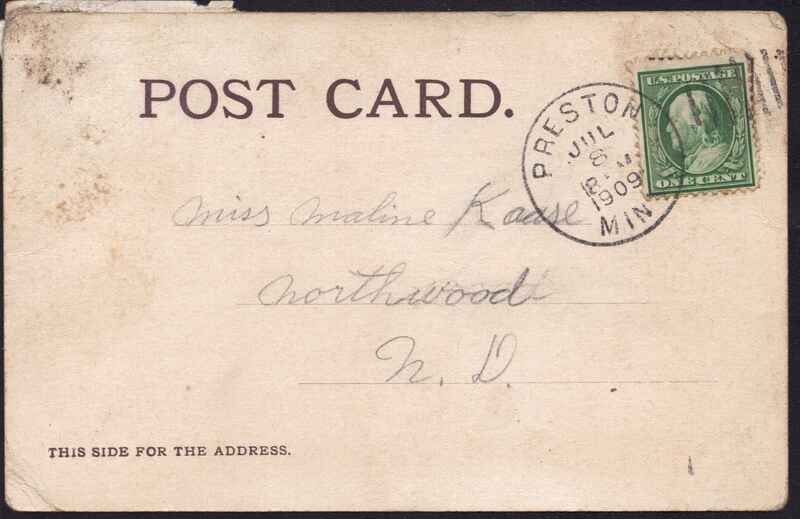
Part of postcards’ popularity was because of cost. It cost only 1 cent to send a postcard, half the price of a letter. For context, a 1910 North Dakota grocery store advertised cucumbers for 10 cents. As of writing, buying a cucumber from Walmart is 72 cents, and mailing a cucumber, 61 cents. If cucumbers kept up with postcard inflation, they would be more than six dollars each! All that is to say, postcards were a cheap way to keep in touch, (especially compared to a produce budget).
Postcards were also fun! Their brightly printed images and short messages were an easy way to celebrate a birthday, mark a holiday, or simply say hi to a friend a town over. Some postcards were tinted photos, some were illustrations, and others were humorous comics. Fancier examples could be embossed.
Early postcards were mostly printed in Germany, even cards depicting American towns and buildings. Superior German lithography techniques allowed for faster printing and better images. By the early 1910s, tariffs against Germany weakened their monopoly, but American printing didn’t catch up before the postcard fad had ended.
When you browse postcards in this collection, remember that these cards were only one family’s contribution to a larger trend that existed at the crossroads of government regulation, printing technology, and mail services.